
Ski and sliding
ESF ski tests and medals: a closer look
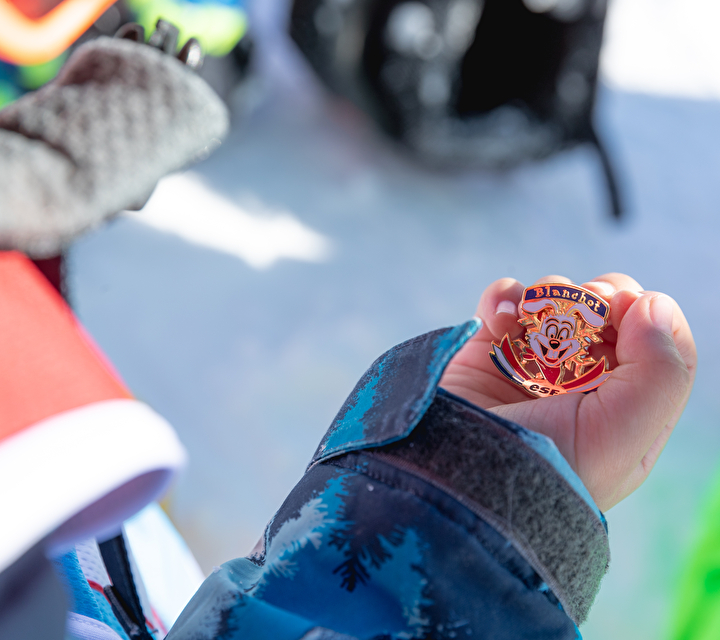
Snowflake, arrow, chamois… These precious badges awarded by the French Ski Schools (ESF) not only reward the progress made at the end of a week of ski lessons, but also give children – and their parents! – an unforgettable souvenir of their stay in the snow.
Children’s tests: from the Teddy Bear to the Gold Star
Your children will be able to take their first ESF test from the age of 4:
- The Teddy Bear: To get their teddy bear, they will have to be able to do a “snaking” descent with snowplough turns, on a very gentle course marked out by four or five poles. Rest assured: if they fail to get their teddy bear, they’ll still go home with their “Piou-Piou”.
- The Flocon: The aim is always to make snowplough turns (7 or 8), returning the skis parallel between turns to ski down the slope.
- The Stars : After the flocon come the famous star tests (first, second and third, in ascending order). These require you to master sideslip turns on an average slope. You also need to know how to stop while skidding.
- Bronze Star: With the Bronze Star, your child takes an important step forward. It’s no longer just a question of knowing how to turn on a regular slope, but of being able to link turns with changes of rhythm on a varied slope. He will learn to stay balanced in a schuss and then to take off over light bumps. Finally, mastery of sculling turns will be required.
- L’Étoile d’Argent: L’Étoile d’Argent requires you to gradually leave the skids behind and move towards greater precision, more supple, in the big trajectories. The first time trial and the first simple tricks will also be part of the programme.
- L’Etoile d’Or: The next test in the hierarchy consists of a timed giant slalom and a technical sequence of perfected turns and sculls on varied terrain (both slope and snow).
Teen and adult tests
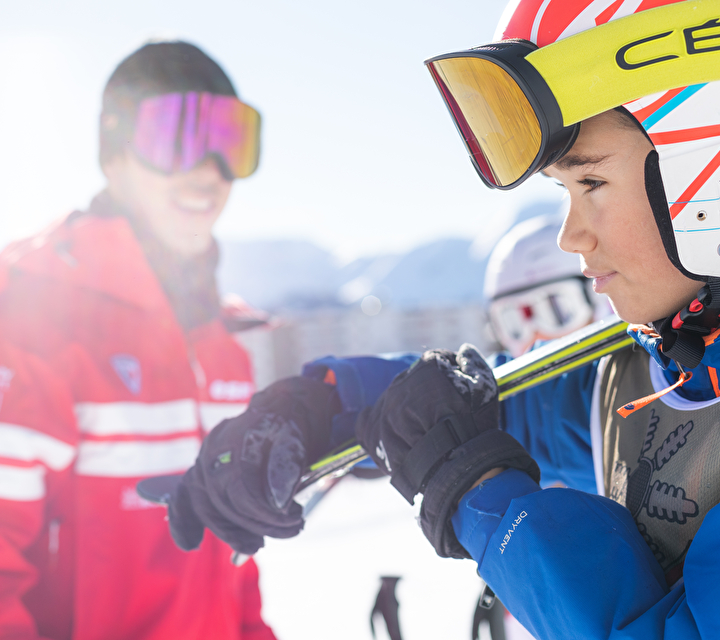
There are also tests for teenagers and adults. These tests enable you to progress step by step to improve your skiing. There are 5 progressive tests:
- Beginner : For the curious skier who has never skied before but wants to get started. The aim is to get to know your equipment, familiarise yourself with the snow and tackle your first (gentle) slopes with confidence. The ESF instructor will teach you how to control your speed and trajectories and how to plough through the snow.
- Class 1 : You will have to make a descent with basic turns on gentle to medium slopes as well as basic sideslips. You will also be taught the turning step to change direction and the skating step to move forward.
- Class 2 : Holders of ‘class 2’ are able to complete turns with the skis parallel on a medium and varied slope, and perform basic sculling. This test also teaches you about different types of snow.
- Class 3: Class 3 will enable you to turn with your skis parallel, learn to handle all types of slopes, and perform perfect rounded and festoon turns, while synchronising your movements with your skis.
- Class 4 : Once you’ve passed class 4, you’ll be a true expert. Your movements and technique are assured, and you can ski down any slope with confidence and mastery.
Performance tests
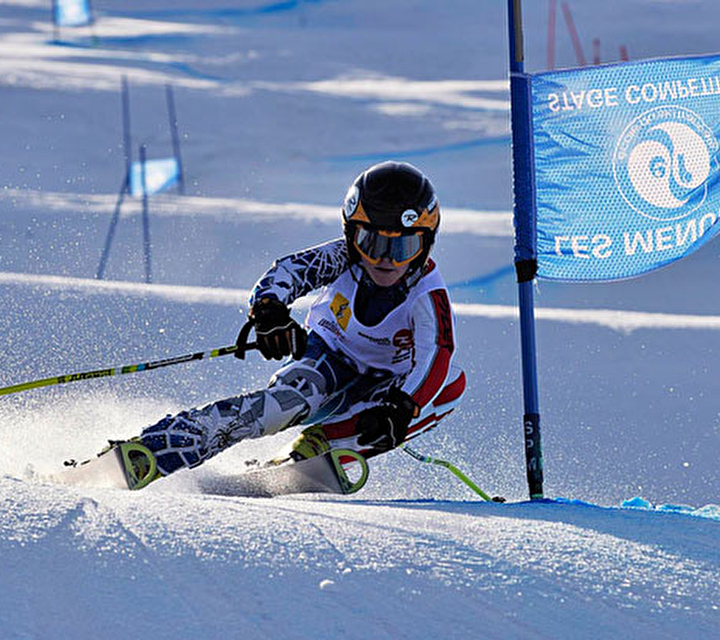
Performance tests are timed tests for both adults and children, covering the whole range of alpine skiing disciplines. Note that there is no hierarchy between these different tests.
- La flèche : Giant slalom with 25 to 35 gates on a piste with a vertical drop of 200 to 250 metres. An opener (ESF instructor) sets the reference time. Performance is calculated on the basis of the percentage authorised in addition to the basic time achieved by the opener:
- Dart: Between 45.01 and 50 %.
- Bronze: between 40.01 and 45
- Silver: between 28.01 and 40
- Vermeil: Between 15.01 and 28
- Gold: Between 0 and 15
NB: 0% means that you have played the same time as the opener. Beyond that, the percentages represent the extra time it took you to complete the slalom.
- The chamois: Special slalom with 30 to 40 gates on a 120 to 200 metre gradient. The performance calculation is the same as for the arrow:
- Cabri: Between 75.01 and 80
- Bronze: Between 55.01 and 75
- Silver: Between 35.01 and 55
- Vermeil: Between 17.01 and 35
- Gold: Between 0 and 17
- The rocket: A Super Giant race lasting around 50 seconds on a course where the number of gates depends on the gradient (between 8 and 12% of the gradient). The performance calculation remains the same:
- Bronze: Between 40.01 and 50
- Silver: Between 28.01 and 40
- Vermeil: Between 15.01 and 28
- Gold: Between 0 and 15
- The record : Timed descent in a straight line over 300 to 500 m with a difference in altitude of between 150 and 250 m. The aim is to beat the speed record (in km/h).
- Skiercross: A series of downhill ski runs including whoops, tables and banked turns on a slope of around 15° and 700 m in length.
- Jumping : Long jump from a ski jump. 2 jumps are made, the best of the two wins the medal:
- Bronze: 60
- Silver: 40
- Vermeil: 20
- Gold: 10
- Skiing : your ski level (bronze, silver, vermeil or gold) is validated when you have obtained at least two identical levels from the tests listed above.
But also :
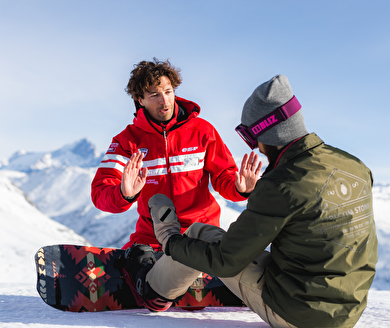
There are ESF tests for snowboarding and cross-country skiing, with the same categories (children, adults and Performance).
Whatever your age or level of winter sport, there’s bound to be a test to help you measure the progress you’ve made during your holiday. Enjoy your skiing!
See also: the medals grid