
Nature and landscapes
Cycling: 10 legendary mountain passes and climbs
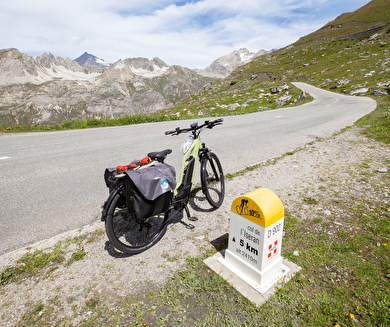
These roads and mountain passes are regularly used by the Tour de France and attract cyclists from all over the world every summer. It takes a minimum of training to ride in the wake of the greatest cycling champions. However, the sublime scenery is well worth the effort!
1489 m
#1 – The Portet d’Aspin
Like the Tourmalet, the Col d’Aspin is one of the great classics of the Tour de France, which has climbed it 71 times. Thomas Voeckler crossed it in the lead onstage 16 of the 2012 Tour de France (Pau / Bagnères-de-Luchon), after passing the four difficulties of the day in first position (Aubisque, Tourmalet, Aspin and Peyresourde).
The most difficult climb starts in Arreau (12km at 6.7%). It is marked by the irregular presence of deciduous trees at the side of the road, on a winding ascent through pastoral meadows.
From Sainte-Marie-de-Campan (12 km at 5%), the climb is more irregular, with a final, more difficult section (from the Lac de Payolle ski resort, at 1100 m altitude).
1498 m
#2 – The Col du Grand Colombier
The Col du Grand Colombier may not have been used much by the Tour de France, but it’s no less formidable. That’s undoubtedly why it has enjoyed a resurgence in popularity in recent years (2012, 2016, 2017 and a festival in 2020).
Its four access roads all offer climbs of almost two hours for average cyclists:
- 15.9km at 7.87% from Artemare
- 18.3 km at 6.89% from Culoz
- 15.7 km at 7.97% from Anglefort
- 19.2 km (at 6.75% for the last 15 km) from Champagne-en-Valromey
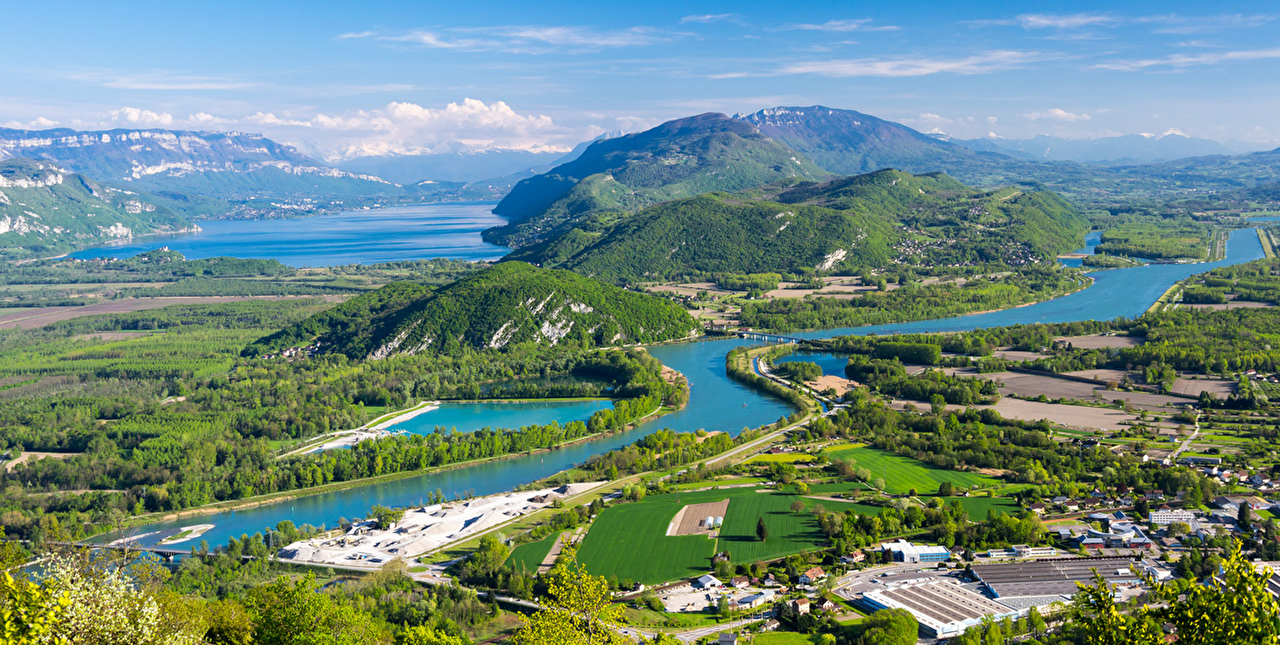
This Jura giant – located on the border between the Ain and Savoie departments – offers breathtaking views of Lac du Bourget, the Rhône and the Alps from its summit.
1569 m
#3 – Col de Peyresourde
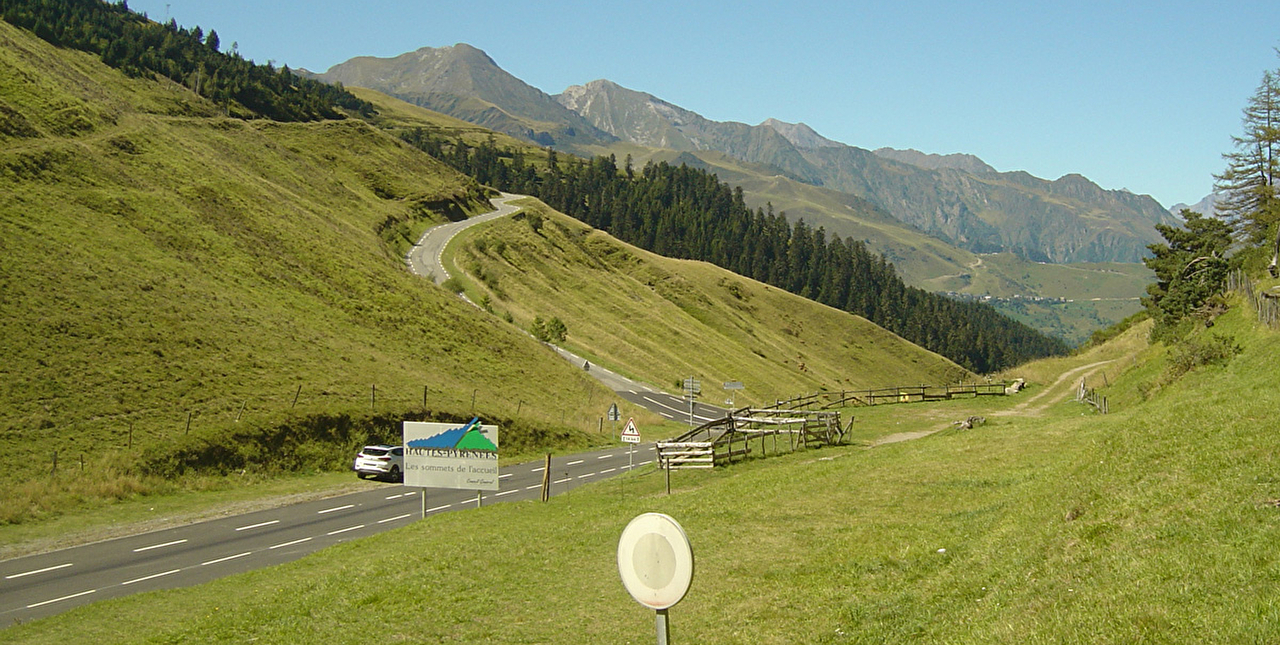
Situated close to the Peyragudes ski resort, the final section of this mountain pass is covered in a carpet of moss that covers the alpine pastures through which the road winds. For former Tour de France director Jean-Marie Leblanc, “this climb makes you want to lie down on the grass next to the sheep and cows”!
Climbed 65 times by Tour de France riders, it is 9.9km long on the west side (with an average gradient of 6.6%) and 15.3km long on the east side (with an average gradient of 6.1%).
But the irregular gradient (with passages at 12% on each side) and the wind, which frequently gusts, make the climb trickier than the raw figures suggest.
1803 m
#4 – L’Alpe d’Huez
It’s hard to imagine today, but the Tour de France’s first visit to the Alpe d’Huez resort in 1952 was attended by only a handful of fans. The climb went on to become a mecca for the world’s greatest cycling race.
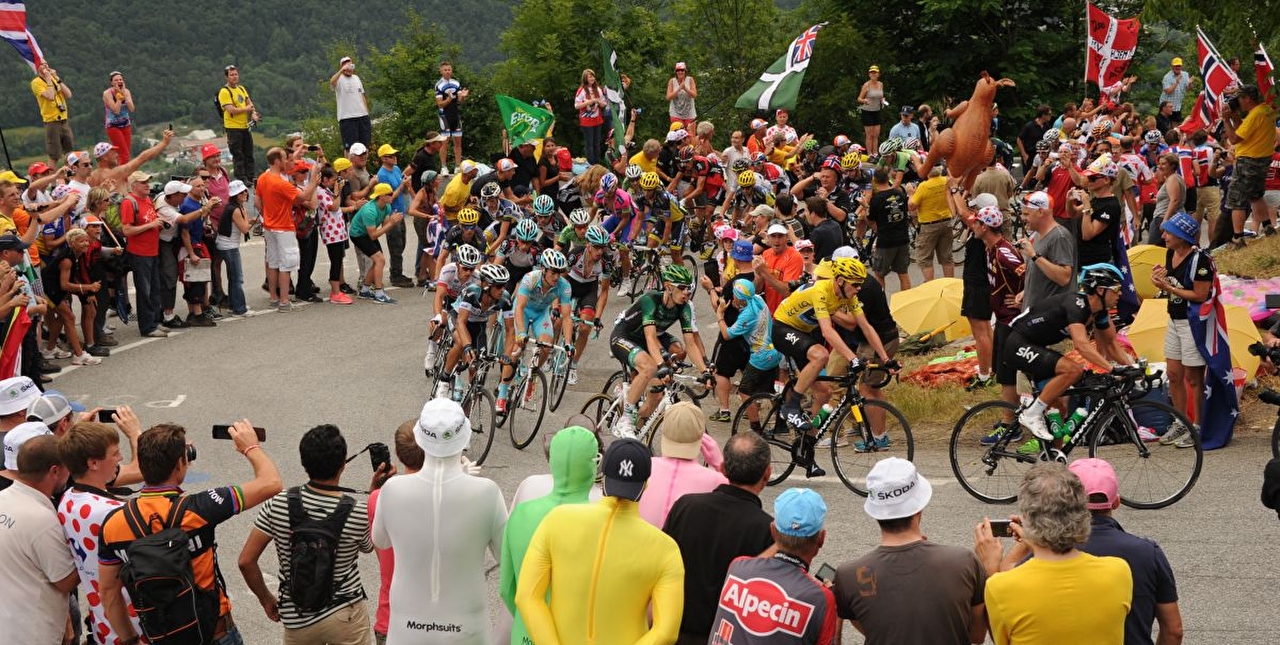
Some 500,000 people now flock to the 21 numbered laces of the climb – each sign bears the name of a winner of the Alpe d’Huez, with the corresponding year – not hesitating to set up camp several days in advance.
In summer, some 1,000 cyclists (5,000 a day during the week of the Tour) tackle the 13.1km ascent every day, at an average gradient of 8.19%.
Internationally, Alpe d’Huez is more famous for the 21 twists and turns of its access road than for its 250km of ski runs!
1912 m
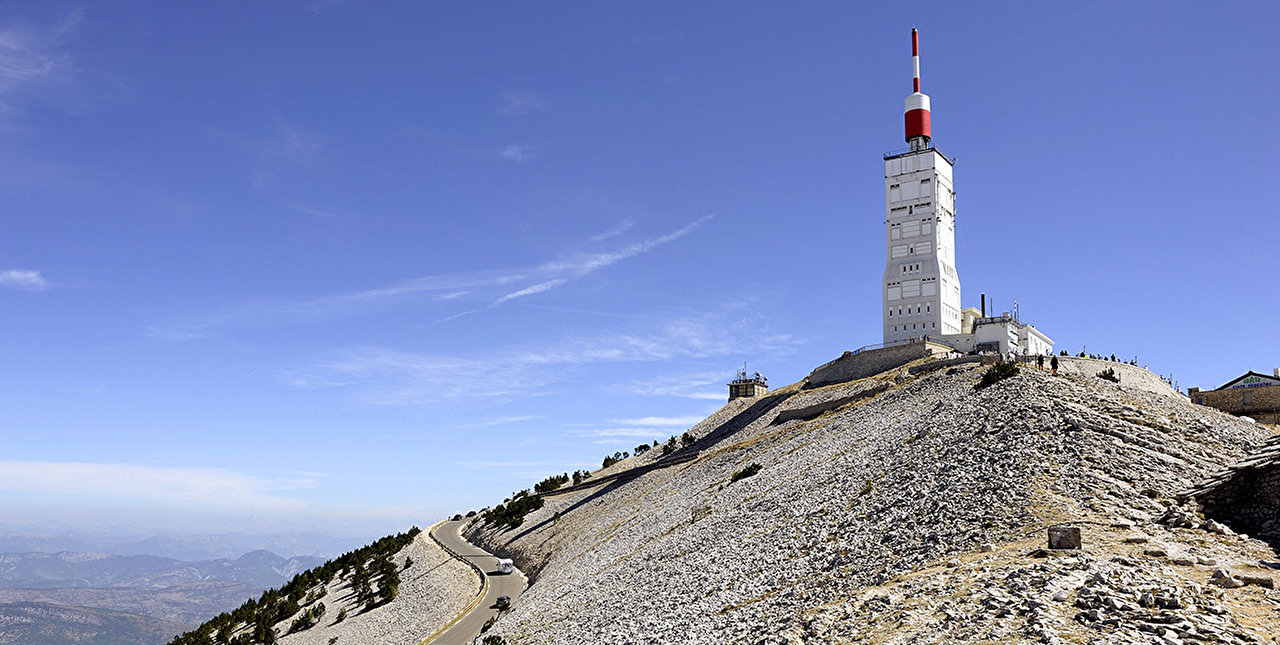
#5 – Mont Ventoux
Visible for 100km around, the summit of Mont Ventoux seems to be perpetually covered in snow, even in the height of summer. This almost lunar appearance, the result of repeated forest fires and the deforestation that began in the Middle Ages, explains its nickname of “Mont Chauve” (Bald Mountain).
Harder on paper (21.5km at 7.22%, compared with 21.2km at 7.15%), the ascent from Bédoin, on the southern slope, is undoubtedly more famous than that from Malaucène, on the northern slope. In fact, 13 of the 16 climbs in the Tour de France have taken place from Bédoin, compared with two on the north side and just one on the east side, from Sault. This, by far the easiest (25.7km at 4.5%), joins the Bédoin road at the Chalet Reynard, 6km from the summit.
2067 m
#6 – The Col de la Croix de Fer
Much more than its average gradient (27.53km at 4.7% on the Isère side, from the Verney dam; 30km at 5.07% from Saint-Jean-de-Maurienne, on the Savoie side), it is the irregularity of its ascent, combined with its length, that makes the Croix-de-Fer so difficult to climb.
However, cyclists who tackle this Tour de France classic (20 times since 1947) are rewarded with a parade of splendid scenery: waterfalls plunging down into the valley, the Grand-Maison dam, the Argentière peaks on the Isère side, the Aiguilles d’Arves and the Belledonne range as you climb from Saint-Jean-de-Maurienne.
2115 m
#7 – The Col du Tourmalet
Its name may mean “wrong turn”, but this giant of the Pyrenees is nonetheless the most frequently climbed pass in the history of the Tour de France (83 times). When the Grande Boucle visited for the first time in 1910, Octave Lapize – who had done much of the climb on foot, pushing his bike – didn’t hesitate to call the organisers “murderers”.
Today, it takes an average cyclist around two hours to climb it, whether on its western flank (17.2km at 7.4% from Sainte-Marie-de-Campan, via the resort of La Mongie) or its eastern flank (18.8km at 7.4% from Luz-Saint-Sauveur, via Barèges).
2360 m
#8 – The Col d’Izoard
When you think of Izoard, the first thing that springs to mind is the scree that dominates the road, which, like Mont Ventoux, gives the place a lunar appearance. The presence of cargneous peaks (a sepia-coloured local rock) reinforces the austere dimension of this “Casse Déserte” located just over 2 km from the pass, on the south-facing slope. This is the pass (15.9km, 6.9% gradient) that has been climbed most often during the Tour de France’s 36 visits.
In 2017, it was Frenchman Warren Barguil, in the race for the polka-dot jersey, who was the first to reach the top of the pass on stage 18 of the Tour.
The northern side of the pass, from Briançon, offers a 19.2km climb at an average gradient of 5.92%.
2642 m
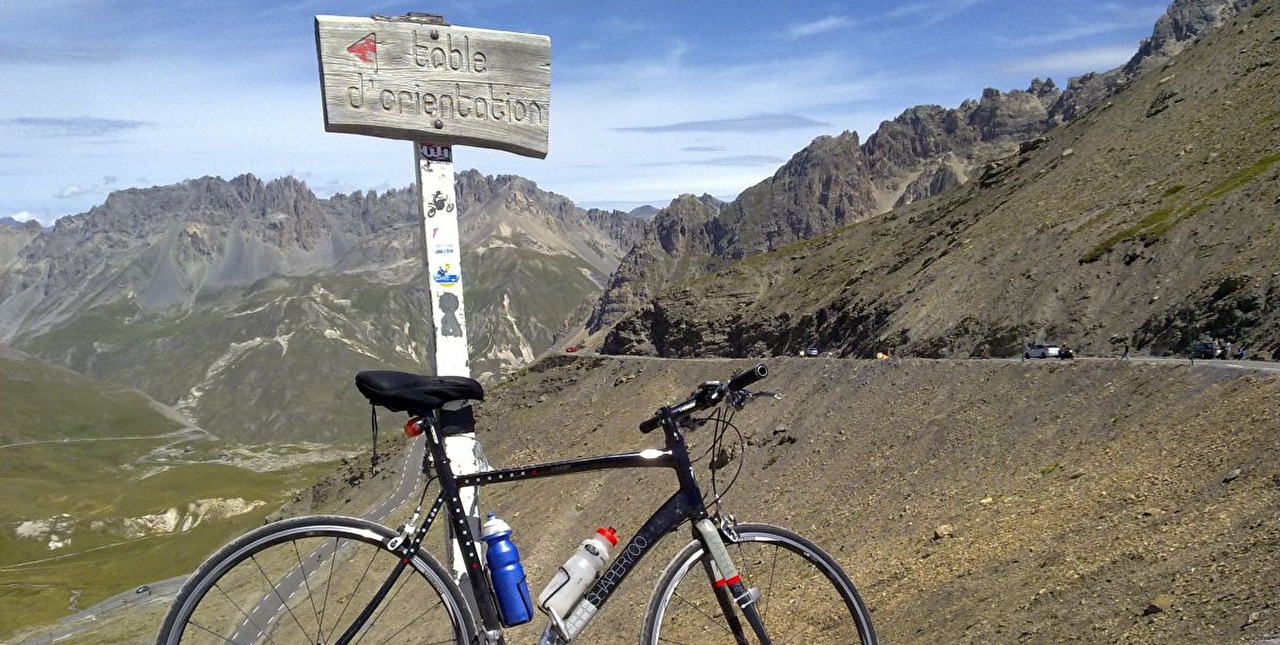
#9 – The Col du Galibier
With 61 passes, the Col du Galibier is one of the great “classic” climbs of the Tour de France. If the southern slope (8.52km at 6.9% from the Col du Lautaret) is far from a sinecure, what can be said of the northern slope, with its 18.1km at 6.9%, the most difficult kilometres being concentrated at the end? It was on these slopes that Marco Pantani built his final victory in 1998.
2770 m
#10 – The Iseran pass
This mountain pass, linking the Maurienne and Tarentaise valleys, can lay claim to being the highest road pass in the Alps. Before a road was built – inaugurated in 1937 – the Col de l’Iseran was the scene of so many mysteries and tragedies that it gave rise to the following saying in Bonneval-sur-Arc (the starting point for the ascent of the southern slope): “If all the people who died on the Iseran held hands, they would form a chain from here to Val d’Isère”.
Today, the Col de l’Iseran is a land blessed by tourists. It provides access to the Val d’Isère summer ski area (on the Pisaillas glacier), and of course two superb bike climbs: 48 km at 4.1% from Bourg-Saint-Maurice on the north side (including 16 km at 5.8% from Val d’Isère) or 13.4 km at 7.3% from Bonneval-sur-Arc, on the south side.