
Gastronomy
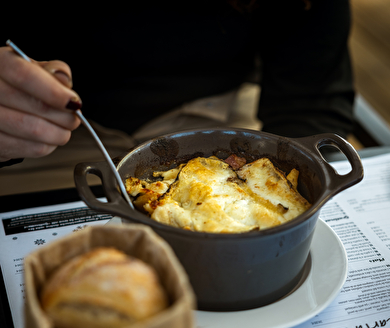
Tartiflette (the original recipe)
An emblematic recipe from the Alps, tartiflette is a recent variation on a traditional Savoyard dish: péla. It is thought to have been invented in the 1980s to sell off stocks of declassified Reblochon cheese. Originating in the Aravis mountains of Haute-Savoie, tartiflette has quickly become the symbol of convivial winter dishes. Reblochon, the quintessential mountain cheese, gives this recipe its essential flavour! Choose it carefully and you’re guaranteed success.
The tartiflette recipe is relatively simple to make. To ensure a delicious, pronounced flavour, make sure you choose a tasty, creamy Reblochon cheese. A farmhouse Reblochon is always preferable. Avoid industrial “tartiflette cheeses” that don’t taste like Reblochon and don’t come from the PDO production area. Look for them in the cheese section of your supermarket or at a good cheese dairy.
Preparation time: 40 min
Cooking time: 25 min
Total time: 1h05
A convivial dish
Ingredients (serves 4)
- 1kg firm-fleshed potatoes (roseval)
- 1 packet of bacon (smoked or not)
- 200g onions
- 1 Savoy reblochon cheese (ideally bought from a farm in the Aravis region)
- 100g cream (purists don’t use cream)
- 2 tablespoons olive oil
- salt and pepper
6 steps to making tartiflette
The tartiflette recipe
- Peel the potatoes, dice and rinse.
- Mince the onions and fry gently in olive oil. When the onions are translucent, add the diced potatoes. Add the lardons, cook the potatoes and then add the crème fraîche.
- Preheat the oven to 200° (gas mark 6/7).
- Scrape the rind off your Reblochon so that it regains its orange colour and cut it in half lengthways (as shown in the photo).
- Pour the cream / potato / bacon mixture into your favourite dish and cover with the two halves of Reblochon (rind side up and flesh against potatoes)!
- Place in the oven for 25 minutes and it’s ready!
Good to know
Born in the 13th century in Thônes in the Aravis mountains, the Reblochon production area now covers almost the whole of the Haute-Savoie department and the Val d’Arly in Savoie. It is made from the milk of local cows, mainly abondances, but also tarines and montbéliardes.
There are two types of Reblochon cheese, recognisable by the colour of the casein tablet:
- Farmhouse Reblochon (green dot) is made entirely on the farm twice a day.
- Cheese dairy or fruitière Reblochon (red tablet) is made from milk collected from several farmers in the production area. Casein pellets guarantee the quality and traceability of Reblochon.
Reblochon takes its name from the Savoyard term “re-blocher”, meaning “to milk a second time” in the 16th century, or “reblasse”, the name given to a local fraud. Traditionally, the farmers of the massif would do a first milking for the owner (usually the abbeys), and a second milking after dark on their own account.
This cheese, which can also be eaten raw, slightly runny, cooked or in a salad, remains one of the most emblematic mountain cheeses!
In video