
Green Mountain
Gastronomy
The French art of living is synonymous with gastronomy! France’s mountainous regions also have their own specialities, restaurants with a unique atmosphere and regional products, all of which add to the charm of a stay in a resort or village, and, more generally, encourage you to discover an area by being guided by your senses.
Two adjectives have been coined to describe today’s mountain gastronomy: authentic and original. It’s an experience that’s completely out of the ordinary, while still offering traditional products. Imagine stepping into a chalet and breathing in the smell of stewed food and melted cheese – you’re in the mountains!
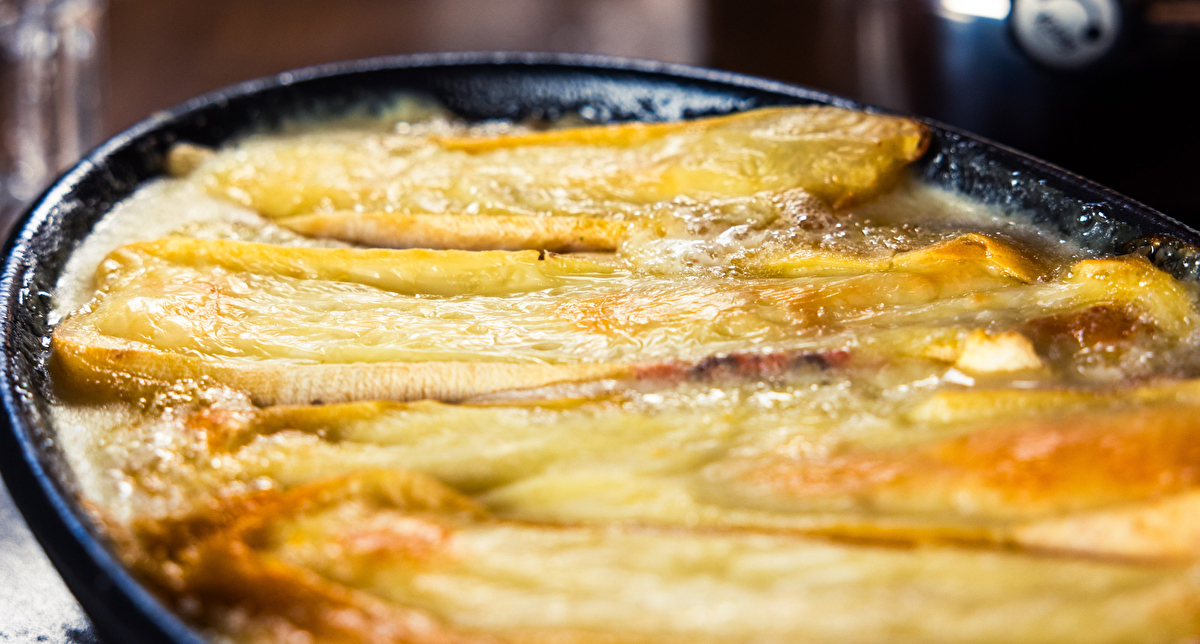
Typical dishes and old saucepans
Mountain gastronomy is the perfect reflection of its natural environment: rich in heritage, generous and warm. From the Alps to the Pyrenees, via the Massif Central and the Jura and Vosges mountains, each mountain region has its own unique specialities, shaped by local produce and traditional skills handed down from generation to generation. These emblematic dishes, often made with simple but rich ingredients, often feature cheeses, creating a comforting cuisine that brings people together.
Emblematic dishes
Mountain cuisine is first and foremost the emblematic dishes that are so familiar to visitors, and which immediately evoke a sense of conviviality and sharing.
In the Alps, it’s hard to resist a raclette, fondue or tartiflette. In the Pyrenees, garbure (cabbage stew) and gâteau à la broche (spit-roasted cake) are synonymous with tasty country cooking. The Massif Central, meanwhile, is the realm of cheese dishes such as aligot or the satisfying truffade.
Finally, in the Jura and Vosges regions, you’ll find recipes where the surrounding countryside inspires dishes such as croûte aux morilles or potée jurassienne. Dishes to warm you up!
These mountain dishes are seductive because of their authenticity and rich flavours. They are an invitation to discover, over the course of a meal, the heritage of a cuisine deeply rooted in its terroir.
As well as the typical dishes enjoyed by all, there are also little-known local specialities to sample. Do you know the ganèfles (cheese and potato dumplings) from the Oisans, the farcement, the donkey ears from the Hautes-Alpes, the Berthoud (Traditional Speciality Guaranteed) and so many others?
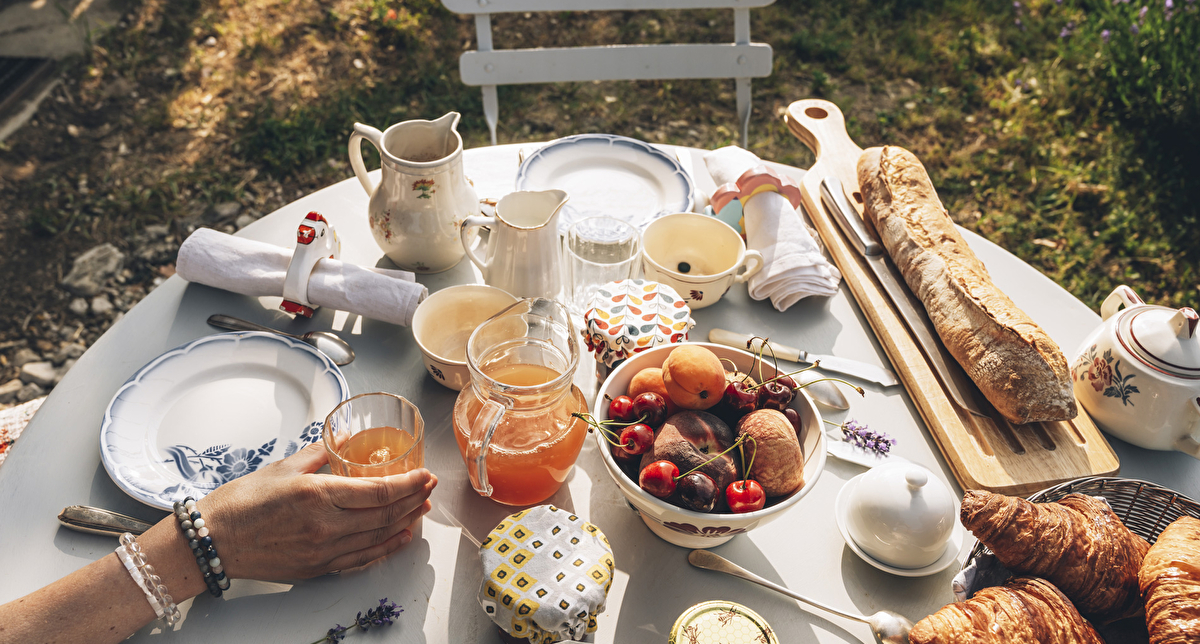
Regional produce
In the mountains, grandiose landscapes mingle with gourmet pleasures through the discovery of regional and local products. Mountain tourism thus takes on a new dimension, that of a journey at the crossroads of flavours and heritage. The climate and rich pastures influence the taste of food, particularly cheeses made from animals reared in the wild and fed on fresh grass, or fruit and vegetables that grow in defiance of the altitude and fresh air. There are more and more short-distance establishments that pay attention to seasonality and sustainability.
Some products not to be missed:
- Bilberries or brimbelles: small, sweet, tasty berries used in many recipes in the Alps and Vosges.
- Trébons onion (Pyrenees): mild, slightly sweet and easy to digest.
- Of course, all cheeses, whatever the mountain range! Beaufort, Reblochon, Tomme, Comté, Bleus, Cantal, Saint-Nectaire, goat’s or sheep’s cheeses…
- Meat and meat specialities: diots, pormonier, Bigorre pork, Dévoluy lamb…
- Mountain honeys, particularly fir tree honey, and sweets made with honey, especially confectionery
- Local spirits: made from larch, genepi or medicinal plants, as well as beers brewed with pure mountain water…
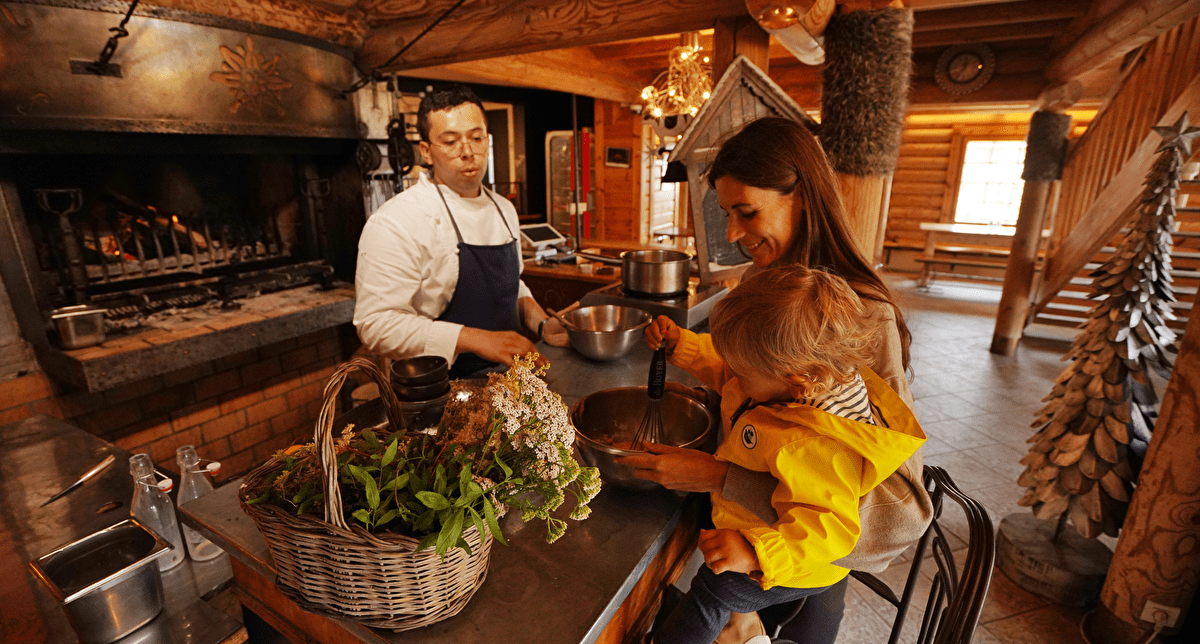
Culinary experiences in the mountains
During a stay in the mountains, it’s easy to stroll through a local farmers’ market or take part in gourmet festivals where traditions and flavours come together in a summit atmosphere.
Culinary experiences, from the most classic to the most modern, are on offer for all ages in the different villages: tastings, original gastronomic tours, meetings with professionals… For example, the biscuit factory in Sancy makes delicacies from the Auvergne region, the sweet shops in the Vosges are open to visitors, as are the pasta-making workshops in Tarentaise and the local chocolate factories.