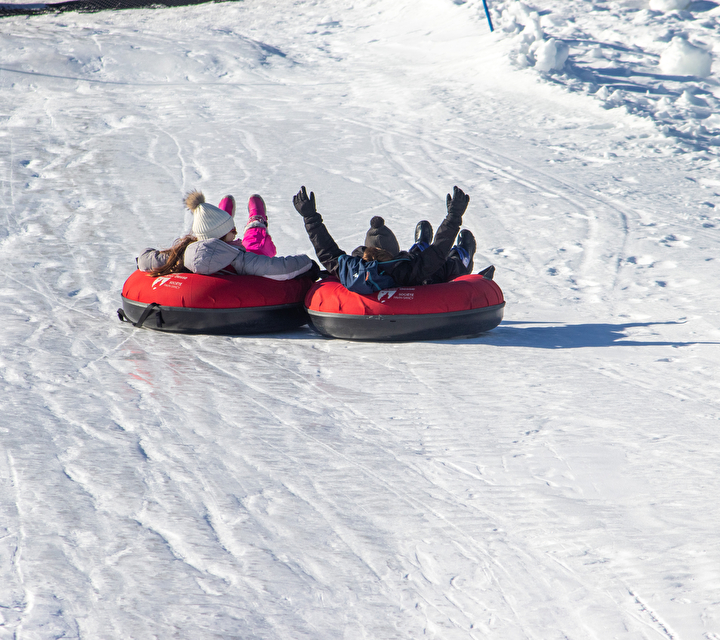
White Mountain
Types of Nordic activities
Nordic activities are cross-country skiing and non-motorised snow sports other than downhill skiing.
Nordic activities are an excellent way to enjoy the mountains, whether you’re looking for peace and quiet, nature, or a sporting activity that focuses on endurance and exploration. They offer a wide range of experiences for everyone, from families to adventurers.
Nordic sports activities
For a sporting approach to Nordic activities, discover all the possibilities here, from the essential cross-country skiing to lesser-known sports such as ski-joering.
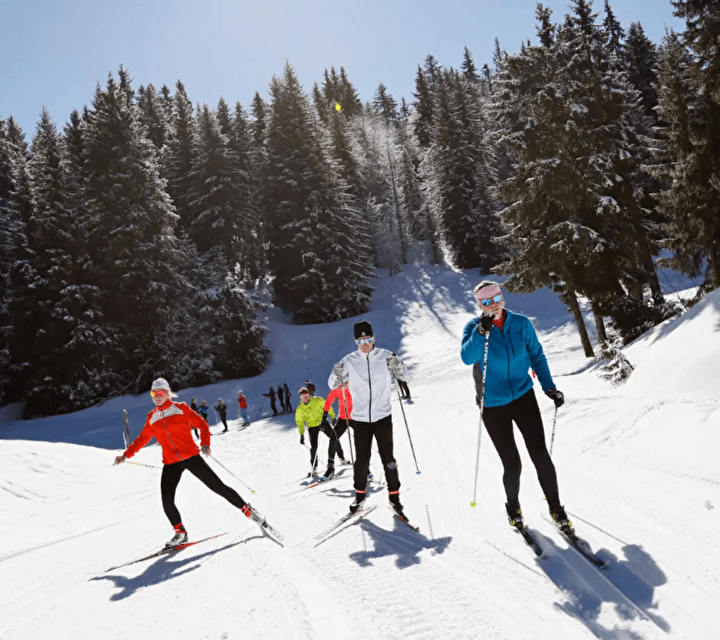
Cross-country skiing
Cross-country skiing is an endurance sport practised on groomed and marked trails. It is characterised by a continuous, fluid gliding movement over gently undulating terrain.
There are two main techniques: the classic stride, where the skis follow parallel tracks, and skating, which uses a skating stride to glide more quickly.
Cross-country skiing is accessible to everyone, whatever their age or level of fitness, and allows you to explore the mountains in peace and quiet, in direct contact with nature.
Biathlon
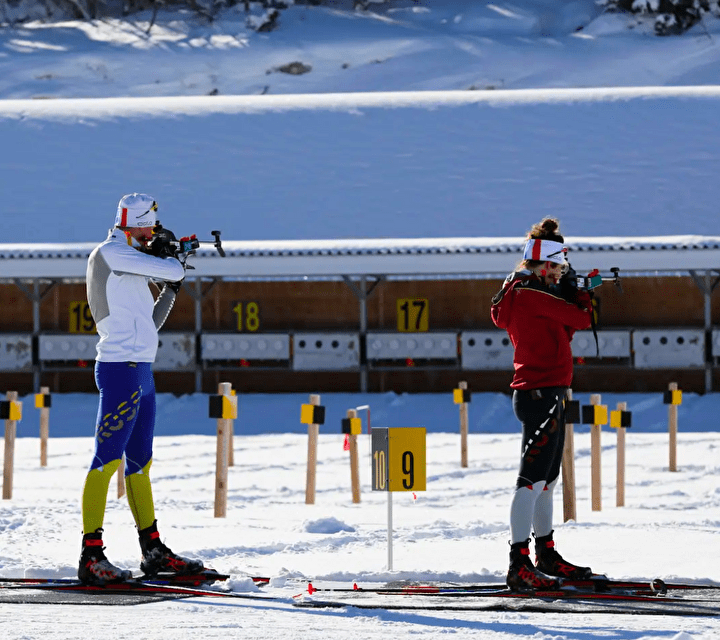
The emblematic sport of the Winter Olympics, biathlon combines cross-country skiing and rifle shooting.
While the cross-country skiing phases demand a great deal of endurance, the shooting sessions require participants to show calm and precision in order to hit the targets, located 50 metres away. The challenge lies in the contrast between the intense physical effort of skiing and the concentration required to aim correctly. Two shooting positions are used in biathlon: standing or prone. Biathlon can also be practised at 10m (pellet or laser) and can also be practised off-snow (e.g. biathlon running).
White trail walking
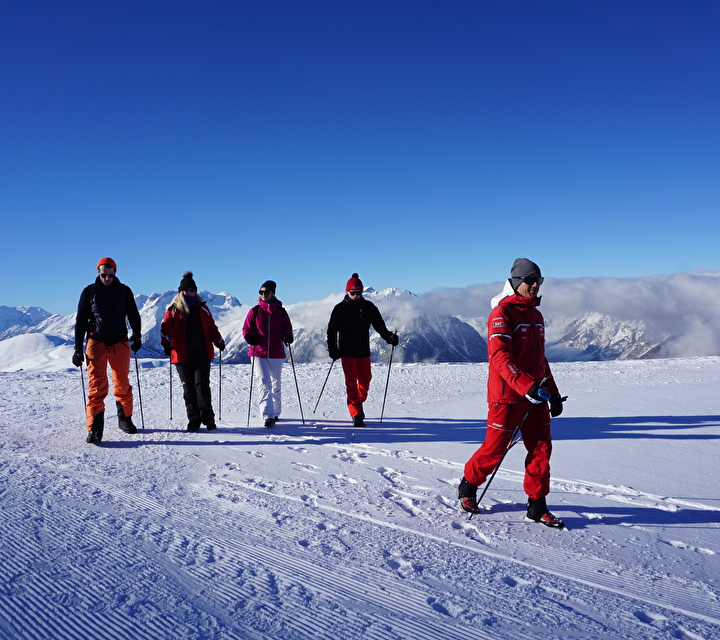
White walking and trail running are activities that take place in a snow-covered environment, on mountain paths during the winter.
Like trail running or classic walking, they take place in the open countryside, but in this case the terrain is covered in snow, making the physical effort more intense.
Participants need technical clothing and suitable footwear, often with crampons to prevent slipping. This activity is particularly popular with trail runners who want to continue their training in winter, while enjoying the snow-covered panoramas.
Telemark skiing
Have you heard of the ancestor of downhill skiing?
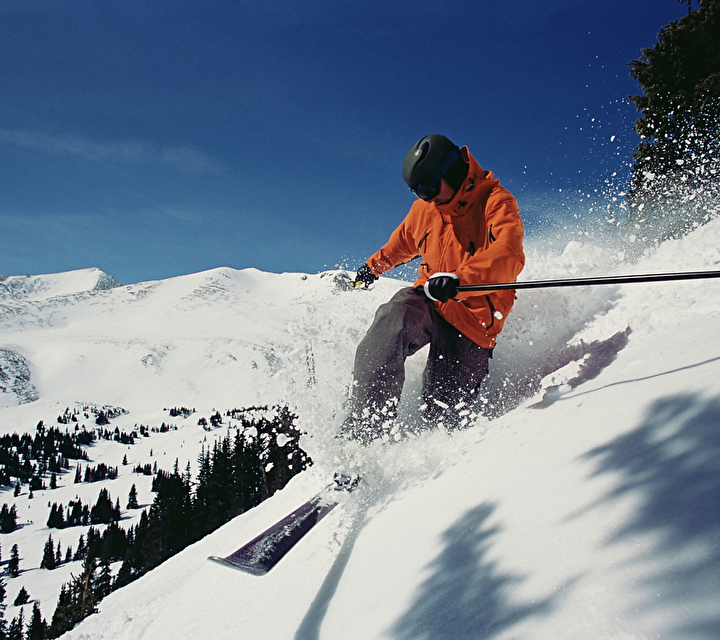
Telemark skiing, which is now back on the slopes, is characterised by a special technique in which the heel is not attached to the ski, allowing the skier to make turns by bending the knee. Telemark skiers use a characteristic position, called the lunge position, which allows them to control speed and direction with fluidity.
Ski-joering
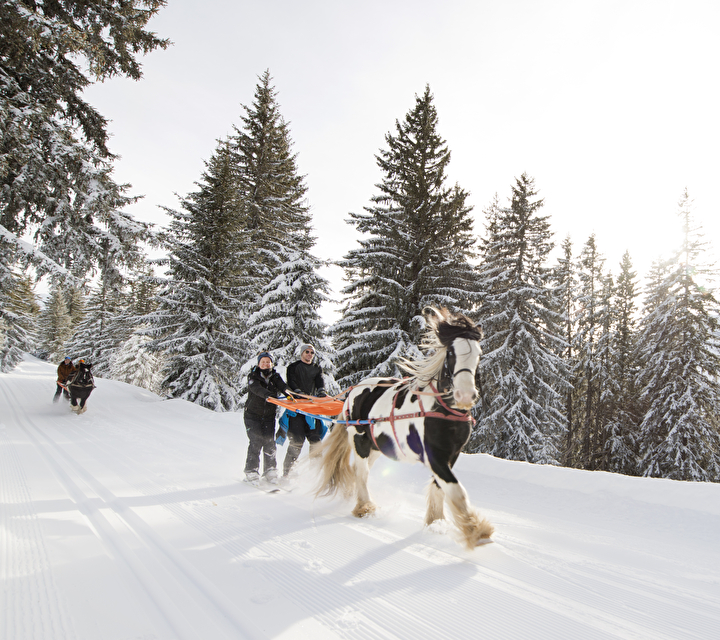
There are two versions of ski-joering: one in which the skier is equipped with downhill skis and pulled by a harnessed horse, and the other in which the skier retains cross-country ski equipment, pulled by a dog. The skier has to keep his balance while following the animal’s rhythm.
It is practised on groomed courses and can vary in difficulty, from a leisurely stroll to a more dynamic race. This is a sport in which communication between skier and animal is essential, to ensure a good trajectory, control speed and share the space with other skiers.
Ski jumping / Nordic combined
Ski jumping is a spectacular discipline that consists of descending a run-up ramp on skis, then launching into the air and covering as much distance as possible before landing.
The aim is to make a long jump while maintaining an aerodynamic posture, with arms at your sides and skis in a V-shape. But ski jumping isn’t just for great athletes! It can be practised in clubs, where even children can try their hand at the sport, starting with small bumps before taking off on a springboard.
Nordic combined is a sport that combines ski jumping and cross-country skiing.
Ski orienteering
Why not try orienteering on skis? This sport combines cross-country skiing with orienteering using a map and compass.
The aim is to follow a set route through the snow-covered mountains, passing a number of markers. The difficulty of this discipline lies not only in the physical effort involved, but also in the ability to choose the best route between the checkpoints.
Nordic relaxation activities
There are plenty of Nordic activities for all ages and abilities, with a little adrenaline thrown in for good measure…
Snowshoes
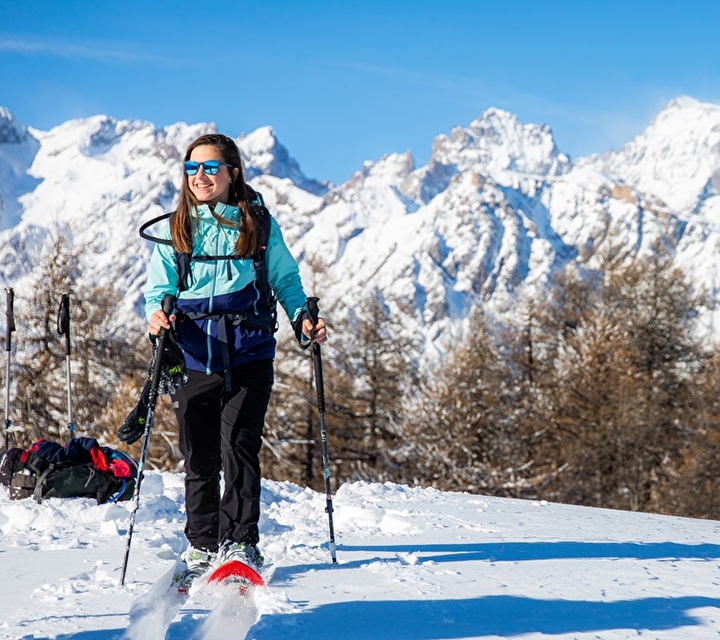
Essential for winter walks, snowshoes make it easy to get around on the snow without sinking into the powder.
Accessible to all, snowshoeing is an ideal way to explore snow-covered landscapes away from busy trails and reconnect with nature. The snowshoe trekking routes are signposted and vary in difficulty, making them suitable for families, beginners and experienced hikers alike. The effort is moderate, but still good exercise for the heart and muscles.
Dog sledding
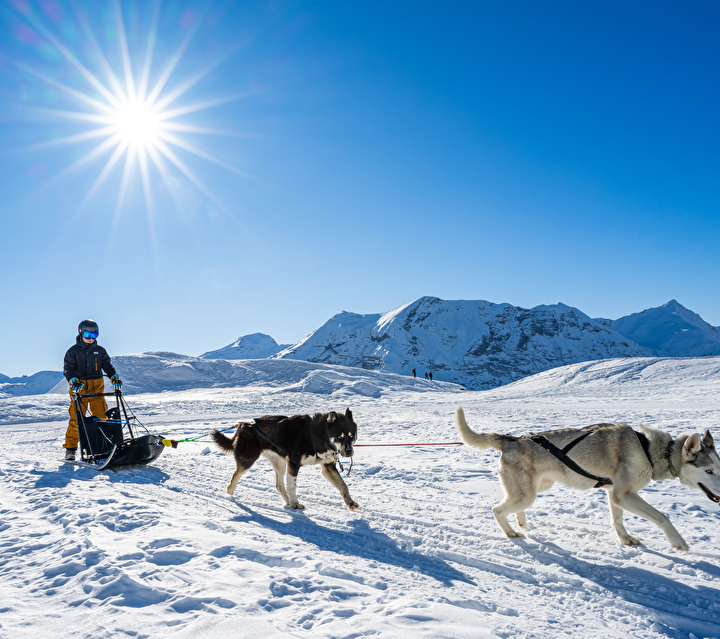
Dog sledding promises an authentic experience of being pulled across the snow by a pack of dogs, in a sled driven by a musher (a professional in the discipline who guides the sled).
The sled dogs, often huskies, are trained to work as a team and run on snowy trails, offering a ride that can be both peaceful and dynamic depending on the route. The musher, at the back, leads the dogs and ensures the safety of the group. This activity is particularly popular with families, who enjoy a gentle yet adrenalin-fuelled experience.
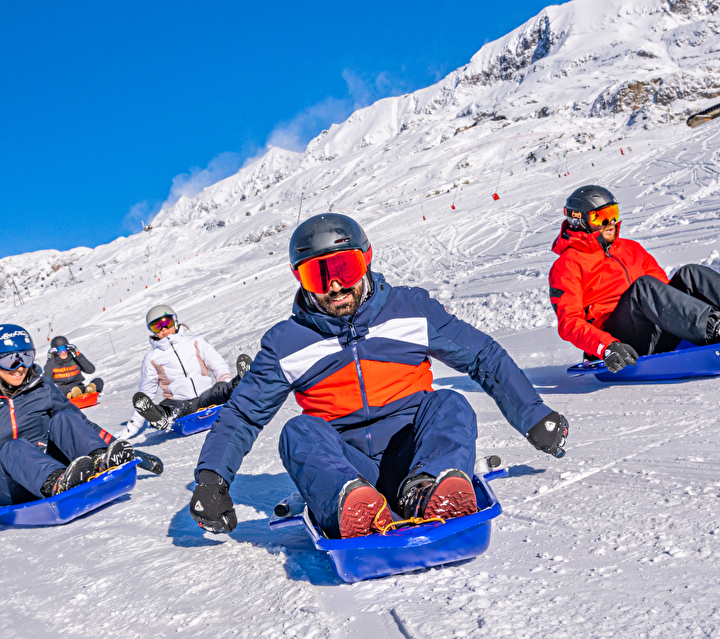
Tobogganing
Who hasn’t tried sledging in the mountains? Tobogganing is a fun activity that’s accessible to everyone, and whatever form it takes, it’s a great way to get a taste of the thrill of sliding down the slopes without needing any special skills.
Today’s ski resorts often offer specially prepared toboggan runs, safe and away from the ski slopes, with different levels of difficulty and sometimes a few banked turns for even more thrills!
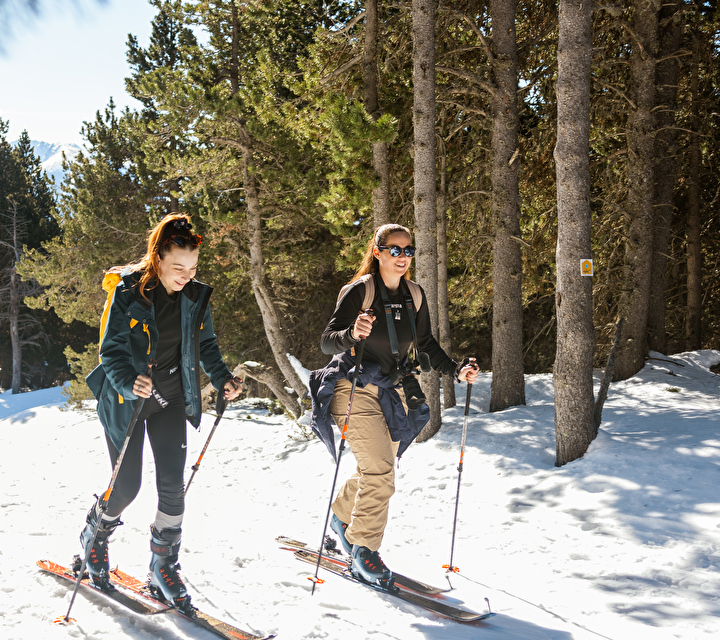
Nordic ski touring
Ski touring is an activity that allows you to explore undeveloped snow-covered terrain. Unlike downhill skiing, which is generally practised on groomed pistes, ski touring takes place on a variety of itineraries outside traditional ski areas.
Skiers use special equipment, including lightweight skis, free-heel bindings and an anti-recoil system (synthetic ‘sealskins’), which grip the snow to climb uphill. Once at the summit, skiers remove the skins and enjoy the descent, using telemark or alpine skiing techniques.
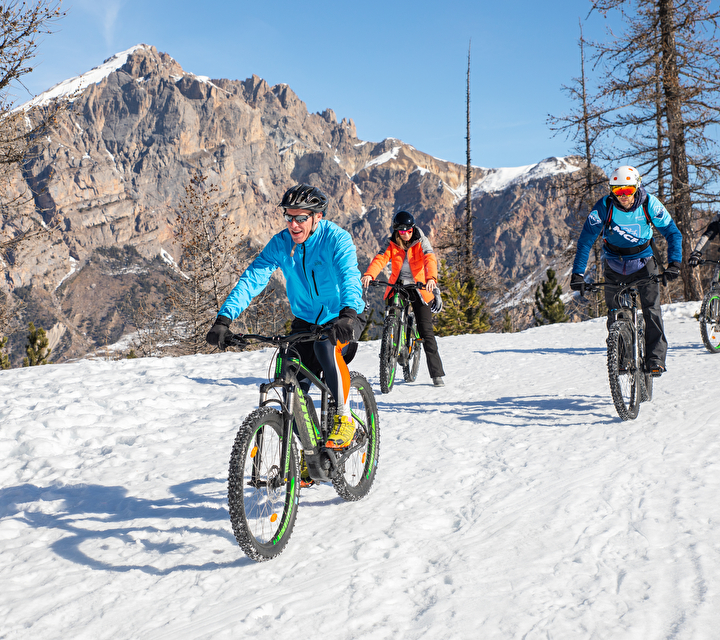
Fatbike
Fat biking is a winter cycling activity using bicycles designed with wide tyres for riding on snow and in difficult terrain conditions. These tyres offer better grip and increased buoyancy, enabling cyclists to navigate snowy surfaces with ease.
Fatbikes are accessible to all, and can be ridden on marked trails or in the wild. Many ski resorts now offer dedicated fatbike routes, with itineraries to suit all abilities.
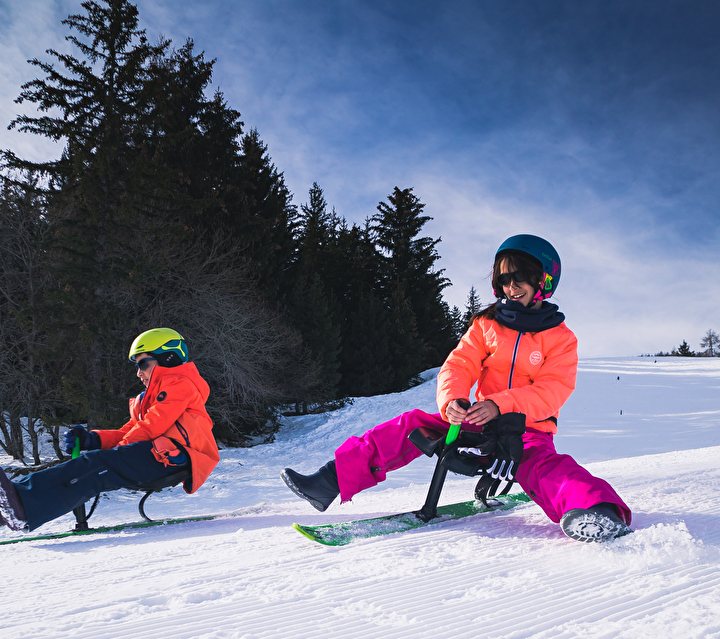
Snooc
An innovative activity that combines skiing and tobogganing, the Snooc offers a unique experience on snowy slopes! The Snooc is a lightweight sled designed to allow the user to sit on the sled, but with skis at the ends to make it easier to slide down the snow.
Snooc is used on ski slopes, but it is also possible to explore ungroomed terrain to add an adventurous dimension to the activity. Accessible to all, it is particularly popular with families and beginners.
Snowkiting
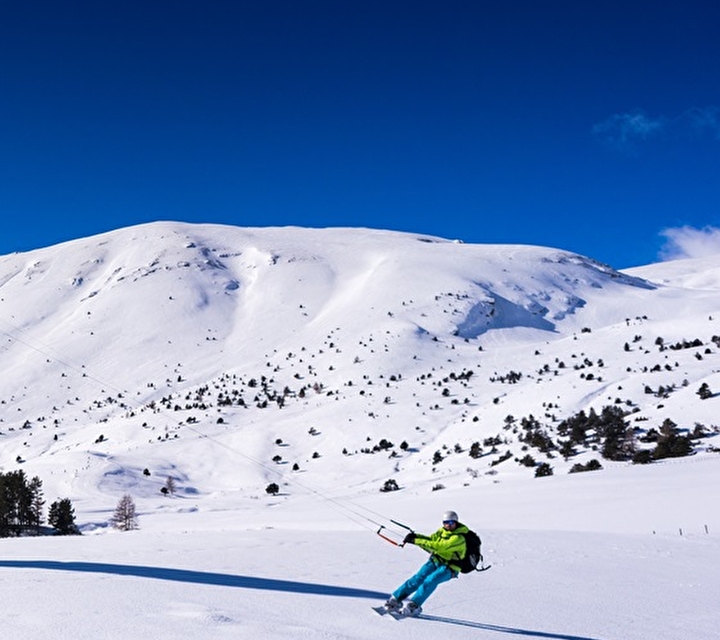
Skiing with a sail? Snowkiting makes it possible! Using a kite, you glide along thanks to the force of the wind. It’s a unique experience, on skis or snowboard, where a specially adapted sail lets you discover undulating slopes in a whole new way.
Ideal for those who love the thrill of freedom, snowkiting requires a mastery of balance and good anticipation of the wind in the mountains, for a risk-free experience.
Snowtubing
Here’s a fun way to slide on the snow. Snowtubing involves sitting on a large buoy and then sliding down a specially prepared track surrounded by raised walls.
Unpredictable, the buoy sometimes makes you turn around, giving you a welcome dose of adrenalin. Most slopes are equipped with a snow wire, so you can be pulled up again, and of course, do it all over again!